Sarah Louise
Words by Glenn Sargeant
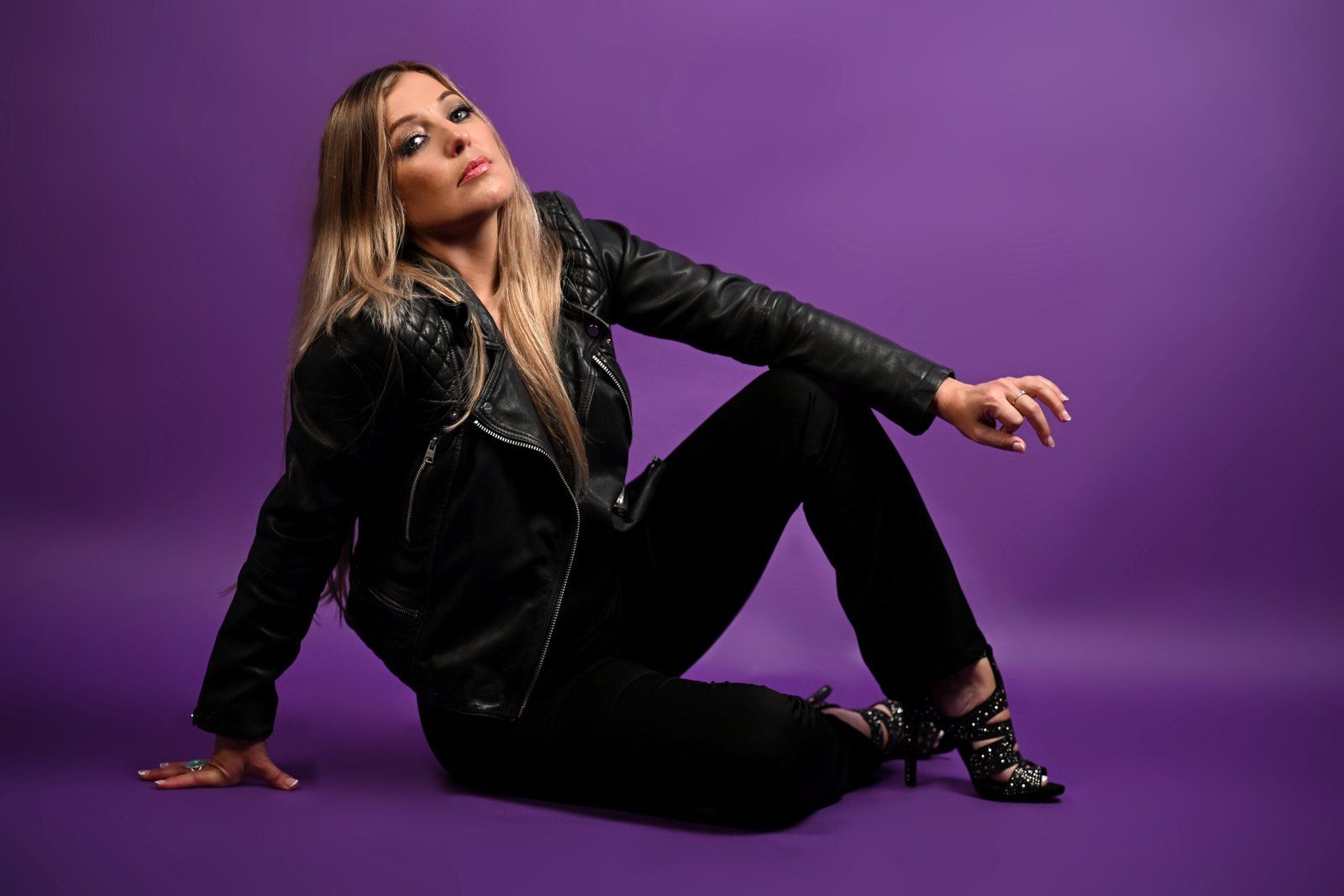
Feature Image Photo Credit: Michelle Fredericks
British singer-songwriter Sarah Louise creates contemporary pop, blending heartfelt storytelling, powerful soulful vocals and acoustic influences.
What is your earliest musical memory?
My mum always says I was musical before I was even born. Apparently I’d move rhythmically in her belly when Super Trouper or Queen’s Radio Ga Ga came on, and as a baby I’d bounce in time to music in my bouncer as though I already knew the rhythm. My own earliest musical memory is nursery, singing He’s Got the Whole World in His Hands at the top of my voice in assembly. I also loved Sing Hosanna, although I always insisted on adding “of kings” to the final “King”, which used to make everyone laugh! I think I was making my own arrangements even then.
When did you begin songwriting?
I started really young, I think from age 4 or 5 I would press record on my little Sony tape recorder and make up songs, and I’d already built up a little collection of recordings. I became so determined for someone to hear them that I applied to Opportunity Knocks. I re-recorded about 20 of my songs a cappella onto a BASF cassette and sent the whole thing off because I couldn’t choose between them! I can still remember at least five of those songs now, but I’ve no idea where either tape ended up. Somewhere in the world there may be a cassette full of very young Sarah Louise originals!
You have your new single ‘Different Kind Of Girl’ out now. What was the inspiration/story behind the song?
Different Kind of Girl came from questioning why I’d allowed expectations, including age, to define who I thought I should be. I don’t feel my age, so why should a number determine how I dress, behave, or express myself? It became about knowing your self-worth, stepping outside what feels safe and giving yourself permission to become who you were always meant to be.
Where did you record the track and who produced it?
Different Kind of Girl was recorded at Sound House Studios in Liverpool and produced by Neal Handforth. It was mixed by Aubrey Whitfield and mastered at Abbey Road Studios by Graeme Pesche.
Do you have any interesting, funny, or memorable stories from the recording sessions?
One of my favourite memories was Neal playing gospel-style chords on the piano while I did my vocal warm-ups — I absolutely loved it and it became a fun part of the session. Meeting the whole team was special too. Everyone was incredibly supportive, particularly when my perfectionist side appeared and I wanted to do a take for about the fiftieth time!
Did you use any particular instruments, microphones or recording equipment to help you get a particular sound/tone for the record?
The track had already been built up with contributions from world-class musicians before we went into the studio, so I was already excited by how it sounded. Then watching them add live bass and keys on top of what we’d already created was amazing. Hearing those extra elements bring the track to life was really special.
Which of your tracks hear you at your a) happiest, b) angriest and c) most reflective?
Happiest: That would actually be a song nobody has heard yet! Sunshine is coming in September and definitely captures me at my happiest — so I guess your readers have just had a little exclusive.
Angriest: Hate Is Gonna Hate. I wrote it during the pandemic after receiving hateful comments when I was singing outside every Thursday evening to try to cheer people up. I channelled that frustration straight into a song, and it later got picked up by BBC Radio and used on TikTok. I loved discovering how many people could relate to it.
Most reflective: Place to Be. That song is about how healing nature can be. Sometimes fresh air, space to think and simply walking your worries away is exactly what you need.
Was it a difficult song to write?
It wasn’t difficult to write — it was difficult to hear how I really felt. I was driving home from climbing Ben Nevis, with a very long journey back from Scotland and plenty of time alone with my thoughts. I realised how much I missed someone, which I really didn’t want to admit. I actually had to pull over, and once I started singing what I was feeling, the song almost created itself.
Do you have any further music releases planned for 2026/2027?
I’m so excited about the amount of new music coming. I’ve been working really hard with my producer this year, and we have such a great team around us. The songs are building into something really special, and I honestly think it could be the best story I’ve ever told through my music. Sunshine is definitely next, but I can’t tell you any more just yet — I have to leave a few surprises!
Where is your hometown and could you please describe it in five words?
I was born in Colchester, Essex — Britain’s oldest recorded town. It’s where I first started busking and played my first ever gig, and so many of my family and friends have their roots there. I live in Suffolk now, which gives me a little more space and calm, but whenever I go back to Colchester, it still feels like home.
Five words: Familiar. Lively. Connected. Nostalgic. Home.
Do you have any live dates planned in the UK/Europe in 2026/2027?
I have lots of lovely shows coming up, including a Sundowner at Frog’s Farm, a special 50s show and a hoedown. Nashville in the Round is continuing every six weeks at the Masonic Hall, and we’re taking it to Newcastle in November too, which I’m really excited about. My team are also planning something very special around Different Kind of Girl for 2027, with more UK venues and dates still to be announced. There’s a lot happening behind the scenes, so keep an eye on my website for the latest dates.
What two things do you hope to have achieved once you have left the stage?
Firstly, I want people to have felt something. Some of the most meaningful moments are when someone tells me a song made them think about someone they love, or helped them recognise feelings they hadn’t been able to put into words. I once had someone cry during Place to Be because they said they hadn’t realised how lost they felt until they heard it. That kind of connection means everything to me.
Secondly, I want to walk off knowing I gave the audience everything I had. Whatever the size of the stage or audience, I want to know I gave them the very best performance I could.
Do you have any favoured stage instruments, effects, pedals, microphones etc?
It depends on the show. If I’m playing guitar, I’m quite particular about the picks I use, and I love having percussion around me because I naturally have a lot of energy on stage. I also love colour and visual elements, so I’ll often bring props that complement the show and create moments of audience interaction. For me, it’s about making a live performance feel like an experience rather than simply standing on stage and singing.
You are given the opportunity to write the score for a film adaptation of a novel that you enjoy. Which novel is it and why?
I’d choose Run, Rose, Run by Dolly Parton and James Patterson. My mum bought me the book and I absolutely loved it. Music is already woven through the story, so I can imagine having so much fun creating a score that follows the emotion, ambition and vulnerability of the characters. Being such a huge admirer of Dolly, it would be incredibly special to put my own musical interpretation around that world.
How do you look after your voice?
I’m really disciplined with vocal warm-ups, lots of water, Manuka honey and fresh ginger, and I try to maintain a healthy lifestyle. I’ve also learned not to book two gigs in one day because my voice needs recovery time. The one thing I still need to master is getting more sleep — and probably talking less, although anyone who knows me will tell you that might be the bigger challenge!
Who are some of your musical influences? Do you have any recommendations?
I grew up with really varied influences. Whitney Houston was my favourite and a huge vocal influence, I’ve always loved Fleetwood Mac for their musicianship, Phil Collins for his production, and Tina Turner was the first artist I ever saw live and really inspired me as a performer. I also grew up buying the Now That’s What I Call Music! albums on cassette, so I was always listening to a huge mixture of current pop.
Right now I’m loving Ella Langley, Gracie Abrams, Teddy Swims and Myles Smith.
I’ve realised recently that I miss listening to music purely for the joy of it, so this September I’m starting SL September Song Reviews, where I’ll be discovering and sharing songs that catch my attention. It’s giving me an excuse to become a listener again, rather than always listening as an artist.
What makes Sarah Louise happy and what makes you unhappy?
The people I love make me happiest — making time for each other, special days out with friends, sharing moments and making memories. I love travelling, nature, animals, exercise, good food, spontaneous days and nights out, and laughing until your stomach muscles hurt. I also love going to a concert where I’m not performing and can just lose myself in the music.
What makes me unhappy is unkindness. There’s so much hate online and I sometimes wonder when we became so comfortable being horrible to each other. I don’t like conflict or people arguing over things that really don’t matter when life is so short. I also find being misunderstood difficult, especially when something means a lot to me. Maybe that’s why I love songwriting — sometimes I can say things much better in a song than anywhere else.
Feature Image Photo Credit: Michelle Fredericks
Sarah Louise’s new single “Different Kind of Girl’ is out now.
Listen Here: https://open.spotify.com/track/3BeD5XLWNR1JO0cXmLiEHe?si=66b6ded401bc42df&nd=1&dlsi=302827f0c7e74bf8
https://www.youtube.com/@sarahlouisemusicofficial
https://www.facebook.com/SarahLouiseMusicOfficial/
https://www.tiktok.com/@sarahlouisemusicofficial
https://www.instagram.com/sarahlouisemusicofficial/
http://www.twitter.com/sarahlou2u